
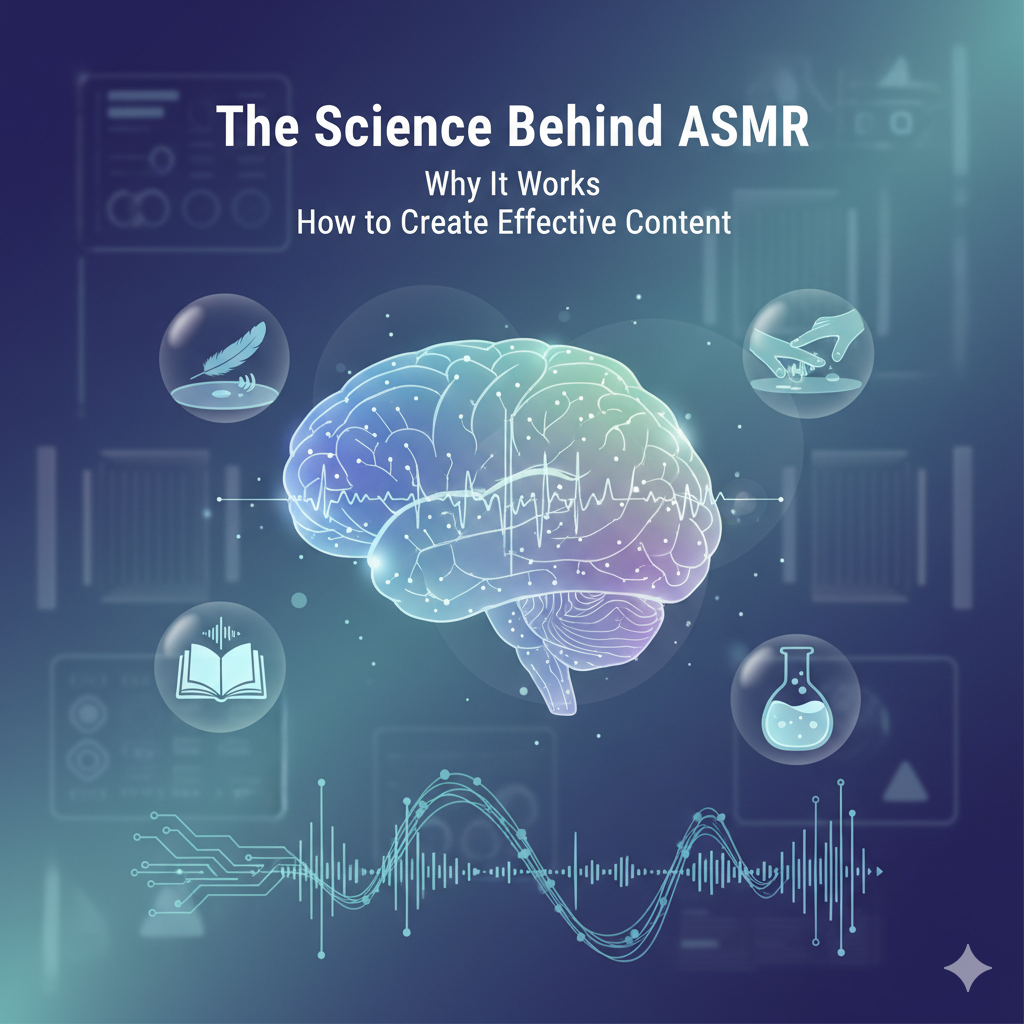
Getting Started with ASMR: The Complete Beginner's Guide for 2026
🧑⚕️ Author Bio
Dr. Sarah Chen is a neuroscientist and ASMR researcher with over 10 years of experience studying the neurological effects of sensory stimulation. She has published multiple peer-reviewed papers on ASMR and helps content creators understand the science behind relaxation responses.
🧭 Introduction
If you've stumbled across ASMR videos on YouTube or TikTok and wondered what all the fuss is about, you're in the right place. As a neuroscientist who has studied ASMR for over a decade—and someone who personally experiences deep ASMR tingles—I've helped thousands of people discover this incredible phenomenon. Whether you want to use ASMR for better sleep, stress relief, or to start creating content yourself, this guide covers absolutely everything a beginner needs to know.
📑 Table of Contents
Getting Started with ASMR: The Complete Beginner's Guide for 2026
You've probably seen ASMR videos in your feed — someone whispering softly, tapping on objects, or cutting colorful soap. Millions of people watch these videos every day to relax, fall asleep, or simply feel good. But what exactly is ASMR, and how do you get started? This guide walks you through everything from scratch.
What is ASMR? A Simple Explanation
ASMR stands for Autonomous Sensory Meridian Response. It's a pleasant tingling sensation that typically starts at the top of your head and travels down your neck, spine, and sometimes into your arms and legs.
Think of it like this: remember the relaxed, dreamy feeling you got as a child when someone gently played with your hair, or when a teacher spoke softly while helping you with a worksheet? That calm, tingly feeling is ASMR.
Common ways people describe it:
- "Brain tingles" — a gentle electrical feeling on the scalp
- "Brain massage" — deep relaxation radiating from the head
- "Warm fuzzies" — a comforting, safe feeling throughout the body
ASMR is triggered by specific sounds, visuals, or personal interactions — called triggers. Not everyone experiences the tingling, but most people find ASMR content deeply relaxing regardless.
For a deeper dive, read our comprehensive guide on what ASMR is and how it works.
How to Know if You Experience ASMR
Not sure if you experience ASMR? Here are signs that you might:
You Might Experience ASMR If...
- You feel pleasant tingles when someone whispers near you
- Watching someone carefully do a task (painting, writing, cooking) makes you deeply relaxed
- Certain sounds — like rain, page turning, or gentle tapping — put you in a calm, almost trance-like state
- You loved getting your hair played with as a child
- Listening to soft-spoken people makes you sleepy in a good way
The ASMR Self-Test
Try this simple experiment:
- Find a quiet room and put on headphones
- Watch this type of content: search YouTube for "ASMR whisper trigger assortment"
- Pay attention to your scalp and neck — do you feel any tingling?
- Try different triggers — if whispers don't work, try tapping or crinkling sounds
- Give it time — some people need several sessions before their first tingle
Important: About 20-30% of people don't experience the tingling sensation, and that's completely normal. Many non-tinglers still find ASMR content relaxing and use it for sleep. You don't need to tingle to benefit.
The ASMR Sensitivity Spectrum
| Level | Experience | Percentage of People |
|---|---|---|
| High Sensitivity | Strong tingles from multiple triggers | ~20% |
| Moderate Sensitivity | Tingles from specific triggers only | ~30% |
| Low Sensitivity | Relaxation without distinct tingles | ~30% |
| No ASMR Response | No distinctive reaction | ~20% |
The Science: Why ASMR Makes You Feel Good
ASMR isn't just imagination — it's a real neurological phenomenon backed by growing scientific research.
When you experience ASMR, your brain:
- Releases dopamine — the "reward" chemical that creates pleasure and satisfaction
- Produces oxytocin — the "bonding" hormone that makes you feel safe and cared for
- Reduces cortisol — lowering your stress levels measurably
- Activates the parasympathetic nervous system — shifting your body into "rest and digest" mode
A landmark 2018 study by Poerio et al. found that ASMR reduces heart rate by an average of 3.14 beats per minute and significantly decreases skin conductance (a measure of stress).
Brain imaging studies show that ASMR activates the same reward regions as music, food, and social bonding — explaining why it feels so pleasurable.
For the full neuroscience breakdown, explore our detailed guide on what ASMR triggers in the brain.
Discovering Your ASMR Triggers
Triggers are the specific sounds, visuals, or actions that produce an ASMR response. Everyone's triggers are different, so discovering yours is part of the fun.
The Most Common ASMR Triggers
| Trigger | Description | Best For |
|---|---|---|
| Whispering | Soft, breathy speech close to the microphone | Relaxation, sleep |
| Tapping | Fingernails tapping on various surfaces | Focus, study |
| Personal Attention | Simulated one-on-one scenarios (haircut, makeup) | Deep relaxation |
| Crinkling | Paper, plastic, or foil sounds | Instant tingles |
| Brushing | Soft brushes on mic or surfaces | Sleep, calm |
| Scratching | Light scratching on textured surfaces | Focus, tingles |
| Page Turning | Book or magazine page flipping | Study sessions |
| Typing | Keyboard clicks and taps | Work ambiance |
| Water Sounds | Pouring, dripping, rain | Sleep, meditation |
| Mouth Sounds | Gentle lip smacking, tongue clicks | Intense ASMR |
For an in-depth exploration of each trigger with pro tips, read our guide on 10 popular ASMR triggers.
How to Find Your Triggers
- Start broad: Watch a "trigger assortment" video that includes many trigger types
- Note your reactions: Which moments make you tingle or feel most relaxed?
- Go deeper: Search for full videos of your favorite trigger types
- Experiment with subtypes: Love tapping? Try tapping on glass, wood, plastic, and metal — they feel very different
- Try visual ASMR: Some people respond more to satisfying visuals than sounds. Check out AI ASMR videos for a variety of visual triggers
- Keep a trigger journal: Track what works and what doesn't
Triggers Change Over Time
Your ASMR triggers may evolve:
- Trigger immunity: A trigger may stop working after overuse. Take a break and return to it later.
- New discoveries: You might suddenly respond to a trigger you never noticed before.
- Mood-dependent: Different triggers work better depending on your current state — tapping for focus, whispers for sleep.
Setting Up the Perfect ASMR Listening Environment
Your environment dramatically affects how strongly you experience ASMR. Here's how to optimize it:
Equipment
- Headphones are essential: ASMR is designed for headphone listening. Over-ear headphones provide the best immersion, but any quality earbuds work.
- Skip the speakers: You'll miss the binaural (ear-to-ear) effects that make ASMR special.
- Volume: Keep it low. ASMR should feel like someone is right beside you, not blasting into your ears.
Environment
- Dark or dim room: Reduces visual stimulation and helps your brain focus on the audio
- Comfortable position: Lying down or reclined works best for relaxation and sleep
- Remove distractions: Phone on silent, door closed, pets settled
- Cool temperature: Slightly cool rooms enhance the tingling sensation for many people
Timing
- Before bed: The most popular time — ASMR helps the brain transition into sleep
- Study sessions: Use ambient ASMR (typing, rain) as background focus audio
- Stress relief: After a long day, 15-20 minutes of ASMR can reset your mood
- Morning calm: Some people start their day with gentle ASMR instead of music
Best ASMR Content for Beginners
Not sure where to start? Here are the best types of ASMR content for newcomers:
For Sleep
- Rain and thunderstorm sounds (low risk, universally soothing)
- Whispered bedtime stories (combines storytelling with ASMR)
- "No talking" tapping sessions (pure sound, no distractions)
For Stress Relief
- Personal attention roleplays (spa, haircut, skincare)
- Guided ASMR meditations (combines meditation with triggers)
- Nature soundscapes (forest, ocean, campfire)
For Focus and Study
- Keyboard typing ASMR (ambient, consistent)
- Library ambiance (page turning, quiet atmosphere)
- Gentle rain loops (background, non-distracting)
For Visual ASMR Fans
- Satisfying cutting videos — check out our glass fruit cutting gallery
- Slime and kinetic sand — browse satisfying slime content
- AI-generated visual ASMR — explore the full ASMR gallery for hundreds of examples
Common Misconceptions About ASMR
Let's clear up the most common myths:
"ASMR is weird or sexual"
False. ASMR is a relaxation response, similar to meditation or listening to calming music. While some people misuse the term, legitimate ASMR is focused entirely on relaxation, sleep, and stress relief. Scientific research consistently categorizes it as a wellness phenomenon.
"Only certain people can experience ASMR"
Partially true. While not everyone gets the tingling, almost everyone can benefit from the relaxation effects. And some people who think they "can't" experience ASMR simply haven't found their trigger yet.
"ASMR is just a placebo"
False. Multiple fMRI and physiological studies have demonstrated measurable changes in brain activity, heart rate, and stress hormones during ASMR. It's a genuine neurological response.
"You need expensive equipment to create ASMR"
False. While pro equipment helps, many successful creators started with smartphones. And with modern AI ASMR generators, you can create professional ASMR content with zero equipment.
"ASMR is a new trend that will fade"
False. ASMR has been growing steadily since 2010. The community now includes tens of millions of viewers, and the introduction of AI tools is accelerating growth further.
Getting Started as an ASMR Creator
Interested in making your own ASMR content? Here's a quick roadmap:
The Beginner Creator Checklist
- Choose your niche: What type of ASMR excites you? Whispers? Tapping? Roleplay? Visual ASMR?
- Start simple: Your first video doesn't need to be perfect. Record a 10-minute tapping video with your phone.
- Invest in audio first: A $50-100 USB microphone makes a huge difference. Audio quality matters more than video quality in ASMR.
- Pick a quiet space: Record when your home is quietest. Even a closet full of clothes works as a makeshift studio.
- Upload consistently: One video per week is a sustainable starting point.
For the complete step-by-step creation process, read our guide on how to create ASMR videos.
Income Potential
ASMR is one of the fastest-growing content niches. Creators earn through:
- YouTube ad revenue
- Patreon memberships
- Brand sponsorships
- Merchandise and digital products
Curious about the numbers? Our ASMR YouTuber income guide breaks down exactly how much creators earn at every subscriber level.
Using AI to Create ASMR Content
You don't need a recording studio to create ASMR anymore. AI ASMR tools let anyone produce professional content in minutes. For a comprehensive overview of the technology, read our guide to AI-generated ASMR.
What AI Can Do for ASMR
- Generate whisper voices — create soothing narration without recording. Try our ASMR voice generator.
- Create visual ASMR videos — AI generates satisfying cutting, slicing, and crunching videos. Use the free AI ASMR generator.
- Write scripts — AI crafts relaxing roleplay scripts and video outlines. Use our ASMR script generator.
- Generate optimized prompts — Get the perfect AI prompt for any ASMR style with our AI ASMR prompt generator.
Why AI ASMR Is Booming
- Zero equipment cost — create from any device
- No recording skills needed — AI handles the technical side
- Unlimited content — generate as many videos as you want
- Viral potential — AI visual ASMR dominates TikTok and YouTube Shorts
Want to start without spending anything? Our guide on how to make AI ASMR videos for free shows you exactly how. You can also follow our step-by-step AI ASMR tutorial to create your first video from scratch.
Many successful creators are now combining traditional and AI-generated content. Learn more about this approach in our AI ASMRtist guide and see how people make AI ASMR videos.
Frequently Asked Questions
Is ASMR safe?
Yes, completely. ASMR is a natural relaxation response. There are no known side effects. If anything feels uncomfortable, simply stop watching or listening.
Can ASMR help with insomnia?
Many people use ASMR as a sleep aid with great success. Research shows it reduces pre-sleep anxiety and helps the brain transition into rest mode. It's not a medical treatment, but millions report better sleep with ASMR.
Do I have to use headphones?
Strongly recommended. ASMR often uses binaural recording techniques that create a 3D sound experience. Without headphones, you'll miss the spatial effects that make ASMR immersive.
How long should an ASMR session be?
There's no rules. Sleep content typically runs 30 minutes to 3 hours. Relaxation sessions are often 15-30 minutes. Short-form ASMR on TikTok is 15-60 seconds. Start with whatever feels comfortable.
Can children watch ASMR?
Generally yes — ASMR content focused on relaxation and sleep is appropriate for children. As with any online content, parents should preview videos first and ensure they come from reputable creators.
Why did ASMR stop working for me?
This is called trigger immunity and it's very common. Your brain adapts to repeated stimuli. The fix: take a break from that trigger for 1-2 weeks, try different trigger types, or explore new creators. Many people find that AI-generated ASMR helps because the variety is endless.
Is ASMR the same as meditation?
They share similarities — both reduce stress and promote relaxation — but they're different experiences. ASMR is a passive sensory response triggered by external stimuli. Meditation is an active internal practice. Many people enjoy both.
Can I monetize ASMR content?
Absolutely. ASMR is one of the highest-paying niches on YouTube in terms of CPM (cost per thousand views). Channels with as few as 10,000 subscribers can earn meaningful income. See our ASMR YouTube income guide for detailed breakdowns.
Conclusion
Getting started with ASMR is simpler than you think. Whether you want to use it for better sleep, stress relief, focus, or to launch a content creation career, the path forward is clear:
- Explore different triggers to find what works for your brain
- Set up a proper listening environment with headphones and a quiet space
- Be patient — ASMR sensitivity often develops over multiple sessions
- Try creating — even if just for fun, making ASMR content is rewarding
The ASMR community is one of the most welcoming spaces on the internet. Jump in, experiment, and enjoy the tingles.
Ready to create your own ASMR content? Try our free AI ASMR generator to make your first video in minutes — no equipment or experience needed.
👩💼 About the Author
🏢 About ASMRIFY
ASMRIFY is the leading platform for AI-powered ASMR content creation. We publish expert-reviewed articles about ASMR, relaxation techniques, and content creation best practices. Our editorial team consists of experienced ASMR creators, audio engineers, and technology specialists dedicated to providing accurate, helpful information to our community of creators and enthusiasts.
Similar Articles
AI ASMR on TikTok: The Complete Guide to Going Viral in 2026
How to create viral AI ASMR content on TikTok. Master the formats, posting strategies, and AI tools that top ASMR creators use to grow massive followings.
What is ASMR? The Complete Guide to Understanding Autonomous Sensory Meridian Response
What is ASMR and why do millions use it to relax? Learn what causes those pleasant brain tingles, the science behind ASMR, and how to experience it yourself.
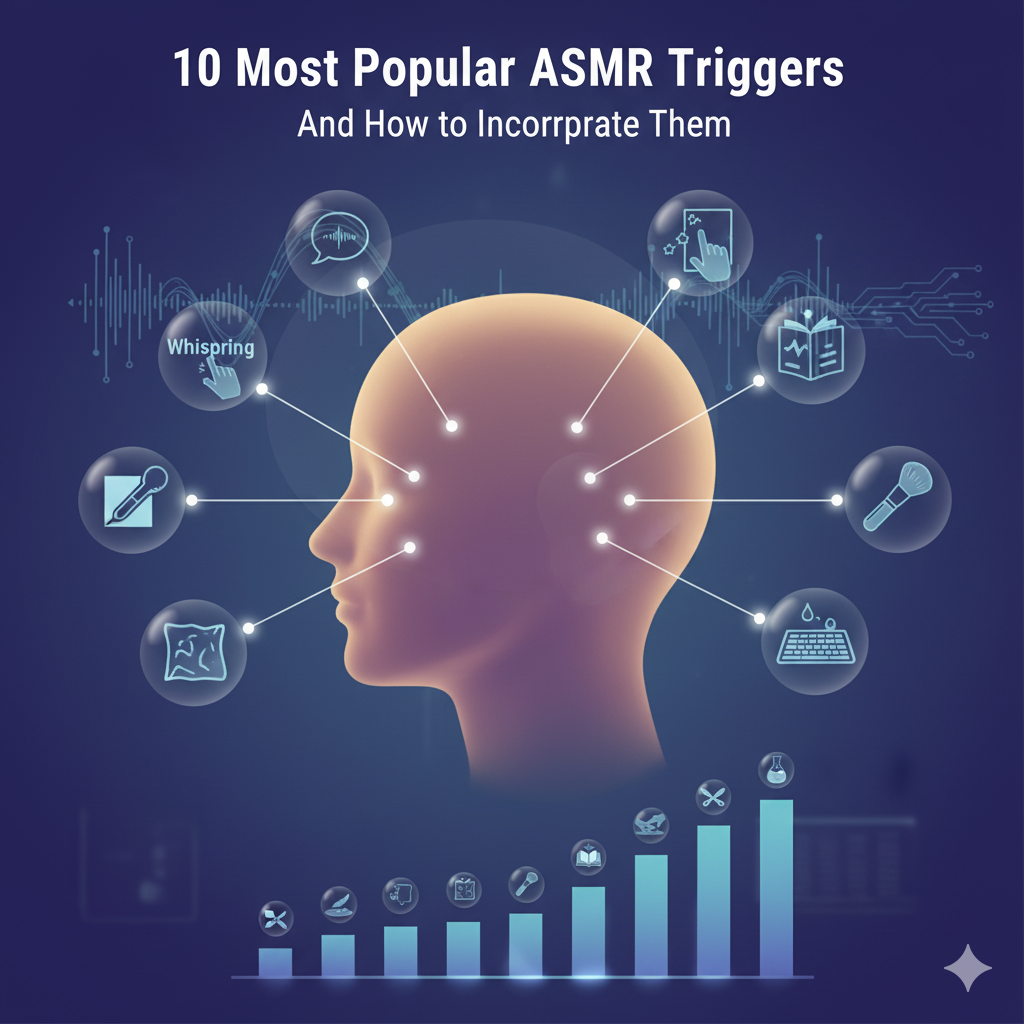
10 Most Popular ASMR Triggers and Types: What They Are, Examples & How to Use Them
Discover the 10 most popular ASMR triggers and types ranked by viewer response. Learn common ASMR triggers and examples, the science behind why they work, and pro tips for using them.