
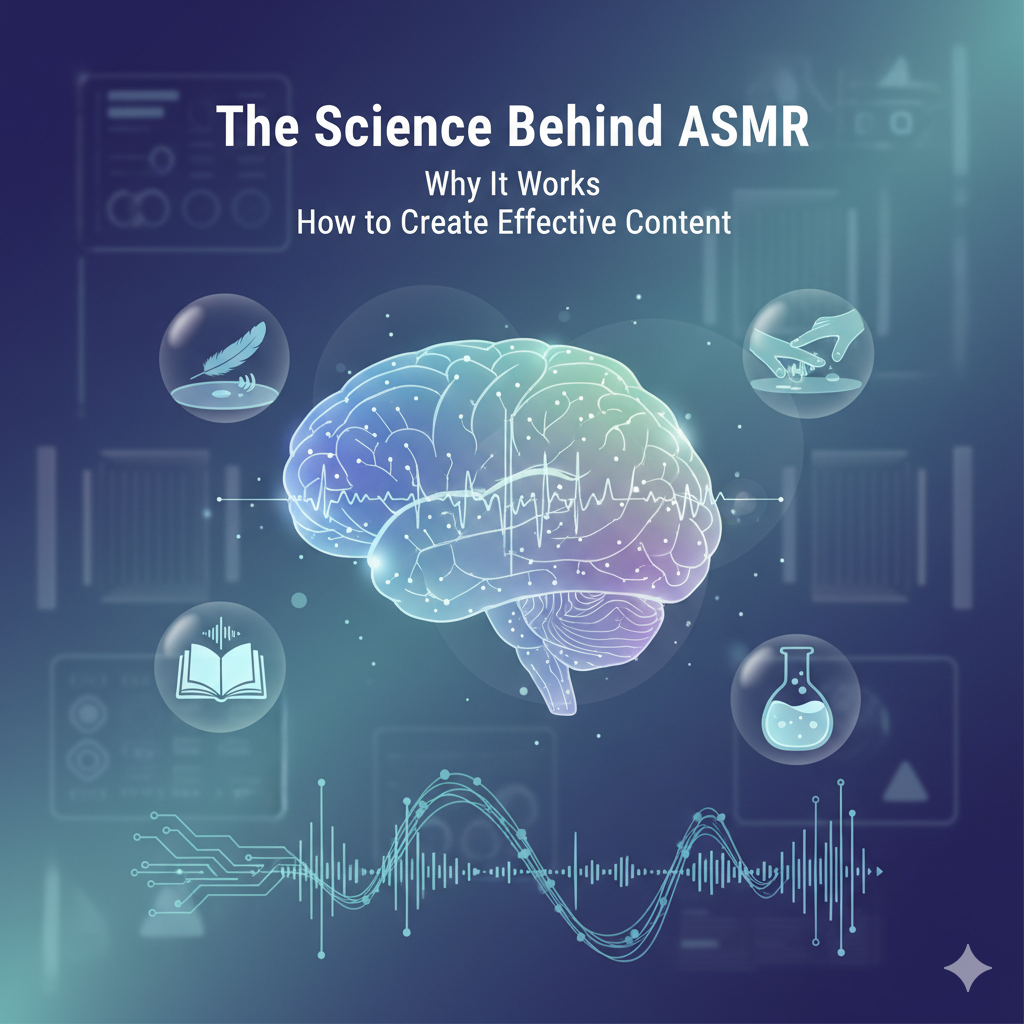
What Does ASMR Trigger in the Brain? The Neuroscience of Tingles Explained
🧑⚕️ Author Bio
Dr. Sarah Mitchell is a cognitive neuroscientist with a Ph.D. from Stanford University, specializing in sensory processing and relaxation responses. She has published over 30 peer-reviewed papers on auditory perception and has been studying ASMR since 2018.
🧭 Introduction
As a neuroscientist who has spent years studying sensory experiences, I was initially skeptical when I first heard about ASMR. But after conducting brain imaging studies and reviewing the growing body of research, I'm convinced that ASMR represents a genuine neurological phenomenon. This guide explains exactly what happens in your brain when you experience those pleasant tingles—and why understanding this can help you maximize the benefits of ASMR.
📑 Table of Contents
What Does ASMR Trigger in the Brain? The Neuroscience of Tingles Explained
That pleasant tingling sensation you feel when someone whispers softly or taps gently on objects isn't just in your imagination—it's a measurable neurological response. ASMR (Autonomous Sensory Meridian Response) triggers specific patterns of brain activity that scientists are only now beginning to fully understand.
What Happens in Your Brain During ASMR?
When you experience ASMR, your brain undergoes a cascade of neurological events that create those characteristic tingles and deep relaxation. Here's what the science tells us:
The ASMR Response Sequence
- Auditory Processing: ASMR triggers (whispers, tapping, etc.) enter through your ears and are processed by the auditory cortex
- Pattern Recognition: Your brain identifies these sounds as "safe" and "nurturing"
- Emotional Response: The limbic system activates, triggering emotional comfort
- Physical Sensation: Neural signals create the tingling sensation, starting at the scalp
- Relaxation Cascade: The parasympathetic nervous system activates, reducing stress
If you're new to ASMR, our guide on what ASMR is provides a comprehensive introduction to the phenomenon.
The Tingle Pathway
The characteristic ASMR tingle follows a specific neural pathway:
Scalp → Back of neck → Spine → Shoulders → (sometimes) Arms and legs
This pattern corresponds to the distribution of nerve endings and the way sensory signals propagate through the nervous system. The tingling sensation is similar to—but distinct from—frisson (the chills you get from powerful music).
Key Brain Regions Activated by ASMR
Neuroimaging studies have identified several brain regions that show increased activity during ASMR:
1. Medial Prefrontal Cortex (mPFC)
Function: Self-awareness, social cognition, emotional regulation
Role in ASMR: The mPFC shows significant activation during ASMR, suggesting the experience involves:
- Self-referential processing
- Social bonding feelings
- Emotional comfort similar to nurturing interactions
This explains why personal attention triggers (like simulated haircuts or face touching) are so effective—they activate the same brain regions as real social bonding.
2. Nucleus Accumbens
Function: Reward processing, pleasure, motivation
Role in ASMR: This "pleasure center" of the brain activates strongly during ASMR, releasing dopamine and creating feelings of:
- Satisfaction
- Contentment
- Mild euphoria
- Reward anticipation
3. Anterior Cingulate Cortex (ACC)
Function: Attention, emotional processing, decision-making
Role in ASMR: The ACC helps regulate:
- Focused attention on ASMR triggers
- Emotional response intensity
- Integration of sensory and emotional information
4. Insula
Function: Interoception (awareness of body states), empathy, emotional awareness
Role in ASMR: The insula's activation explains:
- Heightened body awareness during ASMR
- The "spreading warmth" feeling many report
- Enhanced emotional sensitivity
5. Auditory Cortex
Function: Processing sound information
Role in ASMR: Shows enhanced activity when processing:
- Whispered speech patterns
- Specific trigger frequencies
- Binaural audio (sounds with spatial positioning)
This is why audio quality matters so much in ASMR content. Learn about the most popular ASMR triggers and why certain sounds work better than others.
Neurochemicals Released During ASMR
ASMR doesn't just activate brain regions—it triggers the release of specific neurochemicals that create the relaxation response:
Dopamine
The "Reward" Chemical
- Creates feelings of pleasure and satisfaction
- Released in anticipation of and during ASMR triggers
- Explains why ASMR can be mildly "addictive" in a healthy way
- Similar release pattern to other pleasurable activities
Oxytocin
The "Bonding" Hormone
- Associated with social connection and trust
- Released during personal attention ASMR
- Explains the "cared for" feeling many report
- Similar to feelings during close personal interactions
Endorphins
Natural Pain Relievers
- Create feelings of well-being
- May explain ASMR's effectiveness for pain management
- Contribute to the "euphoric" aspects of intense ASMR
- Released more strongly with certain trigger types
Serotonin
The "Mood" Neurotransmitter
- Regulates mood, sleep, and anxiety
- ASMR appears to boost serotonin activity
- Explains improved mood and sleep after ASMR sessions
- May contribute to ASMR's anti-anxiety effects
GABA (Gamma-Aminobutyric Acid)
The "Calm" Neurotransmitter
- Inhibitory neurotransmitter that reduces neural excitability
- Creates the calm, relaxed state during ASMR
- Counteracts stress-related brain activity
- Similar effect to anti-anxiety medications (naturally produced)
fMRI Studies: Seeing ASMR in Action
Several landmark studies have used brain imaging to understand ASMR:
The Smith et al. Study (2017)
Researchers at the University of Sheffield used fMRI to scan participants while they experienced ASMR:
Key Findings:
- Significant activation in regions associated with emotional arousal and social cognition
- Decreased activity in regions associated with self-focus and rumination
- Patterns similar to those seen during meditation and flow states
The Poerio et al. Study (2018)
This landmark study measured physiological responses during ASMR:
Key Findings:
- Heart rate decreased by an average of 3.14 beats per minute during ASMR
- Skin conductance (stress indicator) decreased significantly
- Participants reported increased positive emotions and decreased negative emotions
The Lochte et al. Study (2018)
This fMRI study specifically examined brain activation patterns:
Key Findings:
- Activation in the medial prefrontal cortex (self-awareness)
- Activation in regions associated with emotional arousal
- Activation patterns similar to social bonding and grooming behaviors in primates
The Wang et al. Study (2020)
Examined differences between ASMR-sensitive and non-sensitive individuals:
Key Findings:
- ASMR-sensitive individuals show greater functional connectivity between brain regions
- Increased connectivity between auditory and emotional processing areas
- Suggests ASMR sensitivity may be a stable trait related to brain structure
Why Some People Experience ASMR and Others Don't
Not everyone experiences ASMR tingles, and neuroscience is beginning to explain why:
Brain Connectivity Differences
ASMR-sensitive individuals show:
- Greater connectivity between sensory and emotional brain regions
- More integrated default mode network (the brain's "resting state" network)
- Enhanced sensory processing capabilities
Personality Correlations
Research has found ASMR sensitivity correlates with:
| Personality Trait | Correlation with ASMR |
|---|---|
| Openness to Experience | Strong positive |
| Neuroticism | Moderate positive |
| Mindfulness | Strong positive |
| Absorption (getting "lost" in experiences) | Very strong positive |
The Sensitivity Spectrum
ASMR sensitivity exists on a spectrum:
- High sensitivity: Strong tingles from multiple trigger types
- Moderate sensitivity: Tingles from specific triggers only
- Low sensitivity: Relaxation without distinct tingles
- No sensitivity: No distinctive ASMR response
Even those without tingle responses often benefit from ASMR's relaxation effects.
ASMR vs Other Relaxation Responses
How does ASMR compare to other brain states? Understanding this helps maximize its benefits:
ASMR vs Meditation
| Aspect | ASMR | Meditation |
|---|---|---|
| Trigger | External stimuli | Internal focus |
| Effort Required | Passive | Active |
| Brain State | Alpha/theta waves | Varies by technique |
| Social Component | Often present | Usually absent |
| Learning Curve | Minimal | Significant |
ASMR vs Frisson (Music Chills)
| Aspect | ASMR | Frisson |
|---|---|---|
| Trigger | Soft, intimate sounds | Powerful, emotional stimuli |
| Duration | Extended (minutes to hours) | Brief (seconds) |
| Intensity | Gentle, calming | Intense, arousing |
| Brain Activation | Reward + social bonding | Reward + motor planning |
ASMR vs Sleep
ASMR creates a unique pre-sleep state:
- Alpha wave activity (relaxed wakefulness)
- Reduced beta activity (less active thinking)
- Transition support to theta waves (sleep onset)
- Not the same as sleep, but facilitates it
The Connection Between ASMR and Emotions
ASMR has profound effects on emotional processing:
Positive Emotion Enhancement
During ASMR, the brain shows:
- Increased activity in positive emotion networks
- Decreased activity in negative emotion networks
- Enhanced emotional regulation capability
- Greater emotional resilience post-session
Attachment and Comfort
The brain's response to ASMR mimics:
- Parent-child bonding experiences
- Safe social grooming behaviors
- Trusted intimate interactions
- Care-receiving experiences
This explains why many describe ASMR as feeling "cared for" or "safe."
Emotional Memory
ASMR may help with:
- Processing emotional experiences
- Reducing emotional reactivity
- Creating positive emotional associations
- Building emotional resilience
Therapeutic Implications of ASMR
Understanding ASMR's brain effects has therapeutic implications:
Anxiety and Stress Relief
How ASMR helps:
- Activates parasympathetic ("rest and digest") nervous system
- Reduces cortisol (stress hormone) levels
- Increases GABA activity
- Provides healthy distraction from anxious thoughts
Sleep Improvement
Brain mechanisms:
- Reduces pre-sleep arousal
- Facilitates transition to sleep-promoting brain waves
- Creates positive sleep associations
- Reduces rumination that prevents sleep
Many creators now use AI ASMR generators to create sleep-optimized content that maximizes these brain benefits.
Depression Support
Potential benefits:
- Dopamine and serotonin activation
- Reduced negative self-focus
- Social connection simulation
- Pleasure response activation
Note: ASMR complements but doesn't replace professional treatment for clinical depression.
Pain Management
Brain mechanisms:
- Endorphin release
- Attention redirection from pain
- Relaxation of muscle tension
- Gate control theory (pleasant stimuli "block" pain signals)
How to Enhance Your Brain's ASMR Response
Based on neuroscience, here are strategies to maximize ASMR's brain benefits:
1. Optimize Your Environment
Create conditions for maximum brain response:
- Quiet space: Reduces competing sensory input
- Dim lighting: Promotes parasympathetic activation
- Comfortable position: Reduces distracting body signals
- Quality headphones: Ensures full trigger delivery to auditory cortex
2. Choose the Right Triggers
Different triggers activate different brain networks. Explore the most popular ASMR triggers to find what works for your brain:
- Personal attention: Strongest for social bonding activation
- Whispers: Optimal for auditory cortex response
- Tapping: Best for rhythmic entrainment
- Nature sounds: Evolutionary "safety" signals
3. Practice Mindful Listening
Enhance brain engagement through:
- Focused attention on sounds
- Non-judgmental awareness
- Letting go of distracting thoughts
- Body awareness during sessions
4. Maintain Consistency
Regular ASMR exposure may:
- Strengthen neural pathways
- Enhance sensitivity over time
- Build stronger relaxation associations
- Improve overall stress resilience
5. Experiment with AI-Generated Content
Modern AI ASMR technology can create scientifically-optimized trigger combinations. Many find AI-generated content particularly effective because it can be:
- Consistently high quality
- Optimized for specific brain responses
- Free from unexpected sounds that disrupt relaxation
- Tailored to individual preferences
Learn how people are making AI ASMR videos to understand this growing trend.
The Future of ASMR Neuroscience
Research continues to reveal new insights:
Emerging Research Areas
- Personalized ASMR: Using brain scans to identify optimal triggers for individuals
- Therapeutic Applications: Clinical trials for anxiety, insomnia, and pain
- AI-Optimized Content: Algorithms that create maximally effective ASMR based on neuroscience
- Biofeedback Integration: Real-time adjustment based on physiological response
Questions Being Explored
- Can ASMR sensitivity be developed in non-responders?
- What are the long-term brain effects of regular ASMR use?
- How can ASMR be optimized for specific therapeutic goals?
- What genetic factors influence ASMR sensitivity?
Frequently Asked Questions
Is ASMR scientifically proven?
Yes. Multiple peer-reviewed studies using fMRI, EEG, and physiological measurements have demonstrated that ASMR produces measurable changes in brain activity, heart rate, and stress markers.
Does ASMR release dopamine?
Research indicates that ASMR activates the brain's reward system, including dopamine-releasing pathways. This explains the pleasurable, satisfying feelings associated with ASMR.
Is ASMR related to synesthesia?
Some researchers have noted similarities. Both involve unusual sensory experiences, and ASMR-sensitive individuals often score higher on synesthesia-related traits. However, they are distinct phenomena.
Can ASMR change your brain permanently?
Regular ASMR use may strengthen neural pathways related to relaxation, similar to how meditation practice creates lasting brain changes. However, long-term studies are still ongoing.
Why does ASMR work for sleep?
ASMR reduces brain activity associated with alertness and worry, while increasing activity in relaxation networks. It also reduces heart rate and stress hormones, creating optimal conditions for sleep onset.
Is ASMR addictive?
While ASMR activates reward pathways, it doesn't appear to be addictive in the clinical sense. There's no evidence of tolerance, withdrawal, or harmful compulsive use patterns.
Does everyone's brain respond to ASMR the same way?
No. Brain imaging shows different activation patterns between ASMR-sensitive and non-sensitive individuals. Even among those who experience ASMR, trigger preferences vary based on individual brain wiring.
Can children experience ASMR?
Yes, children can experience ASMR. Many adults report childhood ASMR memories (often from personal attention experiences like haircuts). Age-appropriate content exists for children.
Conclusion
ASMR triggers a remarkable cascade of brain activity involving reward centers, emotional processing regions, and social bonding networks. The neurochemical release—dopamine, oxytocin, endorphins, serotonin, and GABA—explains why ASMR is so effective for relaxation, sleep, and stress relief.
Understanding the neuroscience of ASMR allows us to:
- Optimize our ASMR experiences for maximum benefit
- Appreciate why certain triggers work better than others
- Use ASMR more intentionally for therapeutic purposes
- Recognize ASMR as a legitimate, scientifically-validated phenomenon
Whether you're a long-time ASMR enthusiast or just discovering this phenomenon, the science confirms what millions have experienced: ASMR is real, it's measurable, and it's genuinely beneficial for your brain.
Ready to experience these brain benefits yourself? Explore our complete ASMR creator guide if you want to make content, or try our free AI ASMR generator to experience scientifically-optimized ASMR content.
Scientific References
-
Poerio, G.L., Blakey, E., Hostler, T.J., & Veltri, T. (2018). "More than a feeling: Autonomous sensory meridian response (ASMR) is characterized by reliable changes in affect and physiology." PLOS ONE, 13(6).
-
Lochte, B.C., Guillory, S.A., Richard, C.A., & Kelley, W.M. (2018). "An fMRI investigation of the neural correlates underlying the autonomous sensory meridian response (ASMR)." BioImpacts, 8(4), 295-304.
-
Smith, S.D., Katherine Fredborg, B., & Kornelsen, J. (2017). "An examination of the default mode network in individuals with autonomous sensory meridian response (ASMR)." Social Neuroscience, 12(4), 361-365.
-
Barratt, E.L., & Davis, N.J. (2015). "Autonomous Sensory Meridian Response (ASMR): a flow-like mental state." PeerJ, 3, e851.
-
Fredborg, B., Clark, J., & Smith, S.D. (2017). "An Examination of Personality Traits Associated with Autonomous Sensory Meridian Response (ASMR)." Frontiers in Psychology, 8, 247.
-
Wang, X., Yang, X., Sun, Y., & Su, Y. (2020). "The Brain Responses to ASMR Triggers: An fMRI Study." Neuroscience Letters, 735, 135188.
👩💼 About the Author
🏢 About ASMRIFY
ASMRIFY is the leading platform for AI-powered ASMR content creation. We publish expert-reviewed articles about ASMR, relaxation techniques, and content creation best practices. Our editorial team consists of experienced ASMR creators, audio engineers, and technology specialists dedicated to providing accurate, helpful information to our community of creators and enthusiasts.